
When I first asked my mom to meet me and be my support vehicle, I asked her about Great Falls, Montana. I guessed I’d be there in the middle of the first week of August. My mom seems to have spent a lot of time plotting how she could come sooner than later. Her preparation happened behind the scenes. I’m not entirely sure how that plot developed, but just as suddenly as my dad, my mom said “I’m headed to North Dakota on Wednesday.” There was a week or so when a friend talked about tagging along and getting a ride to Ohio to see her family for a memorial service, but the dates were unsure. My mom said she’d depart Massachusetts sometime in late July but we were playing a waiting game to find out of she’d have company. I anticipated about a week between leaving Boston and arriving in Montana. We figured out at some point that my mom would basically be driving on the same highway I’d be biking on from Bismarck to Great Falls, so we could meet up sooner than planned that way. Then our family friend, Jean reached out to my mom and told her they needed to meet up ASAP. Suddenly my mom had a friend to book it across the country with. My mom and I were both concerned about her driving so far alone and I was excited that she had someone to keep her awake in the car.


She left on Wednesday, dropped Jean off in Minneapolis to fly back to Massachusetts on Saturday morning, and was in Bismarck in time for a late dinner. I’d been alone for just over twelve hours, just enough time for me to catch up on my blogs. I decided that while I’d been stopped for two days now, my mom needed a day off of driving before I forced her back onto the road. Besides, my dad and I attempted to see the North Dakota Heritage Museum and had about 15 minutes before it closed. So on Sunday I went back with my mom. The place was huge. It had a section on natural history, Native American history, an exhibit on North Dakota clothing, technology, farming and culture. I think we managed to see every inch.
TW: Suicide
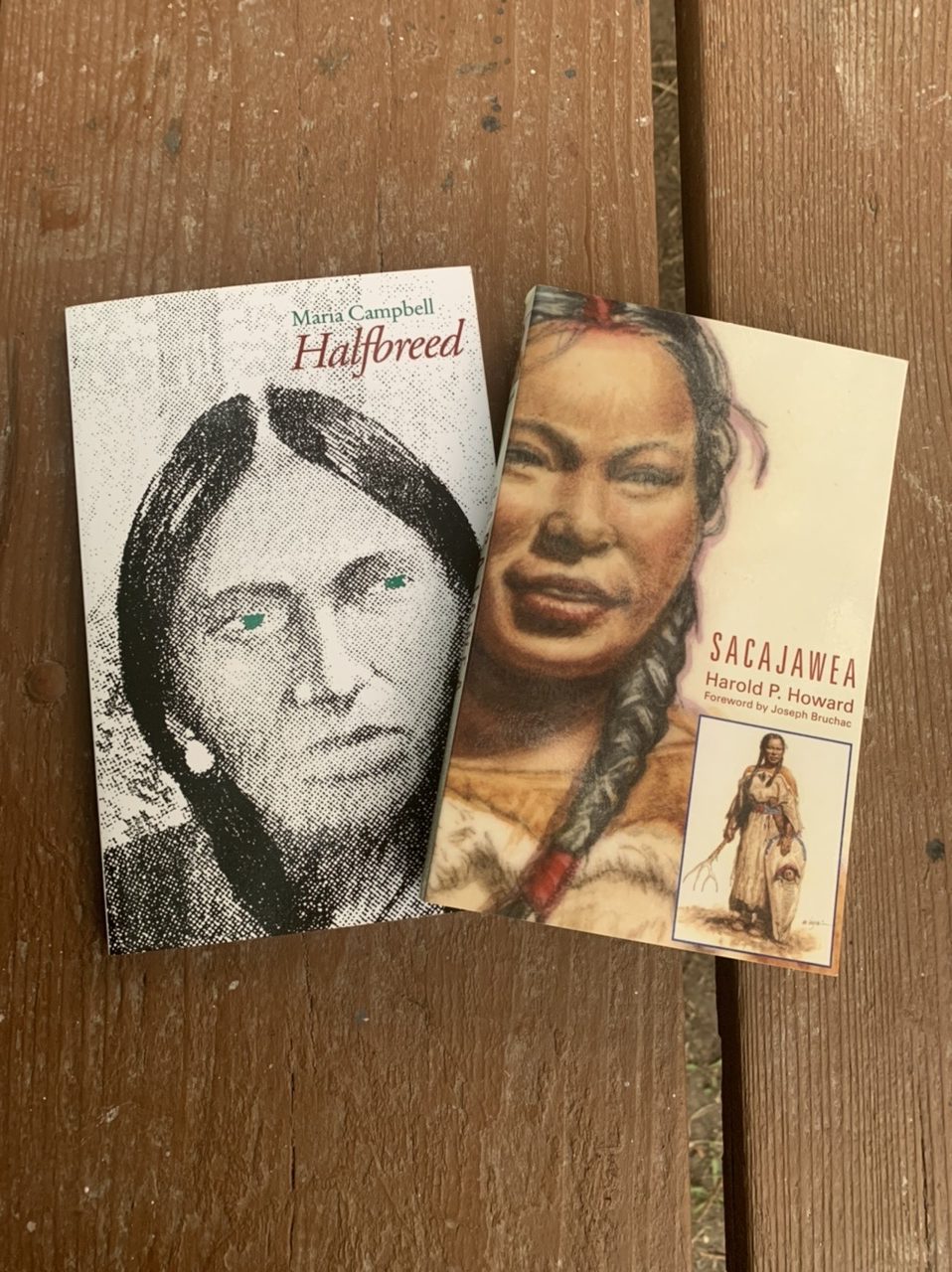
I decided I needed a paper book to read at campgrounds at night, since when I started biking as early as I could, I usually had most of the afternoon to relax before bed. I bought a biography on Sacagawea and a book called “Halfbreed” about a woman’s experiences being both native and white. It’s a dynamic I particularly want to do justice to in my novel as there are a handful of men on the expedition who were both Native American and French Canadian. I’ve read a lot and listened to a lot of podcasts about the struggles facing modern Native Americans. Invisibility and lack of representation seems to be the biggest factors. Feeling unseen, particularly because of your ancestral whiteness, or white people going through the world naively thinking your people have been killed off just because they can’t physically see your heritage in your skin color has had a profound effect on indigenous people’s mental health and suicide rates among teens is so high it’s heart breaking. I can see why. If I lived in a world where people valued my existence so little that they presumed I was dead, it would be easy to fall into the thought pattern that the world won’t notice if I’m gone, that my death wouldn’t impact anyone.
That got dark, but it’s a primary reason I think writing a novel on the Lewis and Clark Expedition is necessary. It’s something we need to talk about. We need to stop viewing Native Americans in the past tense, and these men, George Drouillard, Pierre Cruzatte, Francois Labiche as well as several other French boatmen who didn’t follow all the way to the Pacific, were all both French Canadian and Native American. I can’t tell you the number of historians who write off their native heritage and call them white men.
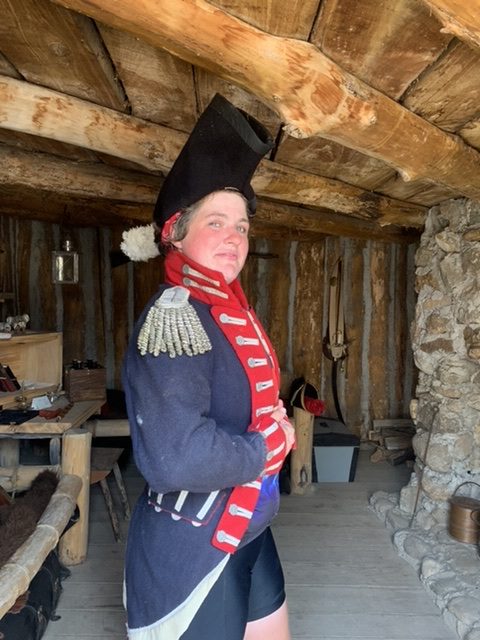
As I looked at my maps more closely in Bismarck and read their commentary, I had an unfortunate realization. I was breaking away from the Missouri River. Due to increased truck traffic at the oil refineries on 1804, (the highway I’d been following since South Dakota) and a complete lack of shoulders, the Adventure Cycling Association rerouted the bike trail. 1804 and 1806 had been the official auto tour on either side of the river through both South and North Dakota, but after Bismarck the Missouri went north and I went west. First though, I biked up to Fort Mandan in Washburn. I was so excited to be there and their visitor center did not disappoint. This was the first visitor center that actually had an interpreter and a tour! My mom went on ahead and texted me that there was one starting at the hour. I got there just in time. The visitor center is just down the road from the state park where there’s a reproduction of the fort the Expedition built in the winter of 1804-1805. I got a close up look every room in the fort. I even got to try on a reproduction of Meriwether Lewis’s uniform coat. I chatted with the interpreter for a bit about my trip and my book, and she told me if I stuck around she might be able to get me in to see Patrick Gass’s (the carpenter for the Lewis and Clark Expedition) journal from the expedition. So we stuck around. At first I browsed the gift shop, because I need to know what books they have that I haven’t seen before. When I checked out, I mentioned my bike trip and Shannon, the woman at the register, recognized me from Instagram! That was the first time that has happened to me. I think it’s safe to say most of my followers are friends or friends of friends, but she said she followed me.

We talked for a very long time about Lewis and Clark. She has a Master’s in public history and specialized in Early American History. She seems to be a wealth of knowledge on Lewis and Clark. Of course I found her on Instagram and followed her. She had recently done a bit of a Lewis and Clark road trip to research a paper for We Proceed On, the Lewis and Clark magazine I’d recently become obsessed with (some of this was gleaned from a conversation with her coworker). I saw on her Instagram that she was in Saint Louis the same day I arrived there.
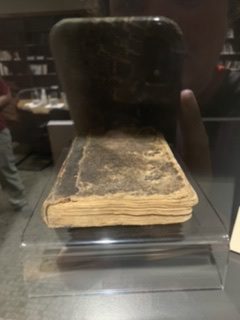
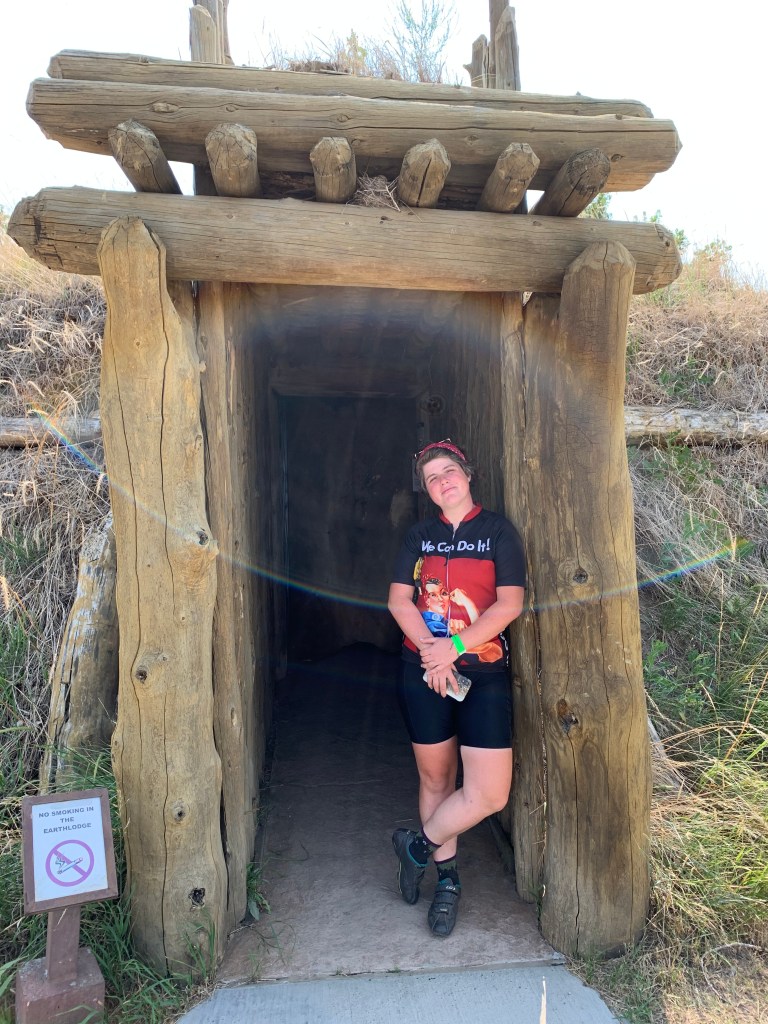
I did get in to see Patrick Gas’s journal, and shortly after, my mom and I headed to the Knife River Village visitor center, not too far away. It contained a small museum about the Mandan people and a reproduction of an earth lodge. I had seen one back in Nebraska City, but this one felt much more lived in and real. This was the point at which the trail diverted from the Missouri. I found a campground close to it though, in Pick City, close to the water. I wasn’t ready to stay away quite yet.

P.S.
Two notes:
Firstly, I am about two days away from the Continental Divide right now. From tomorrow until quite possibly next Sunday, I won’t have much phone service or internet, as I’ll be in the mountains. That means I’ll either skip Thursday’s blog or post it late.
Second, I neglected to mention about my time with my Dad in South Dakota and North Dakota. First, The day I met up with my dad as I was rushing to Chamberlain, SD I ran into the only other person I’ve seen biking the Lewis and Clark Trail in the nearly 3k miles I’ve biked. He is still the only person I’ve seen to this day. He was biking west to east and had his wife riding along as a support vehicle.
 The Stars On the Horizon
I love reading your blog and following along on your adventure!
LikeLike
So glad to see the picture with your Mom. Cousin Mary Keenan===
LikeLike