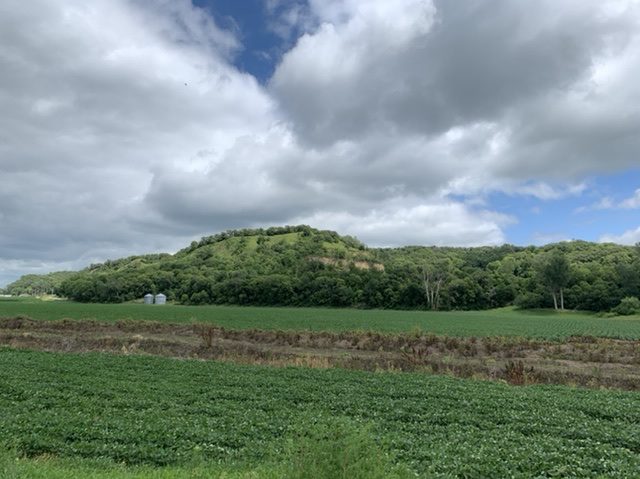
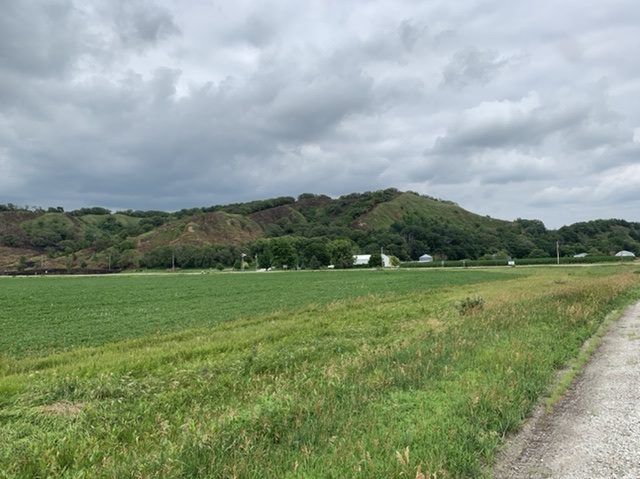
It’s not too far from Council Bluffs to Sioux City. My first day back on the road after so much rough travel, I got to Onawa. It was a long stretch of wonderful flatness, more what I’d been promised in the plains states than what I’d gotten. Seriously, glacial hills in Kansas? Loess Hills in the first part of Iowa! It was primarily a travel day, so as Lewis and Clark would write, I proceeded on.
In Council Bluffs I made a genius decision that has left me in a relative state of luxury ever since (my definition of luxury has become very different from a normal human’s. For instance, sleeping with a pillow has become luxury). I bought a thermos, one the size of a water bottle, the other 36 ounces. They can both hold ice water for 24 hours, loosely. Running out of water has been a pretty constant fear of mine, as one of my first nights on the trail I was at a campground with no working water. I wound up without enough to drink the next day because I needed water to cook my food and I needed to ration it. I have since acquired more water bottles just by purchasing water at gas stations. I’ve been teased about how many water bottles I carry (seven of various sizes) but I haven’t run out, and that’s the main thing.
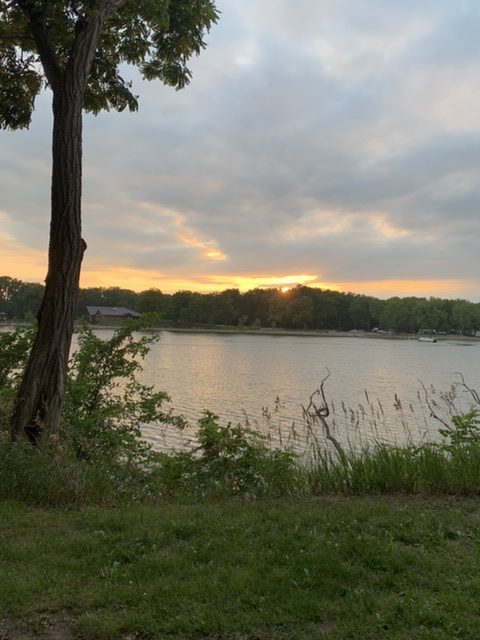
I may have jumped the gun a bit when I scheduled my campground that night. I saw there was a KOA near my route and reserved a site on Lake Lewis and Clark (beware, there are many Lake Lewis and Clarks on this trip. When I inevitably mention one again, it will be a different one in another state). This lake is an oxbow, which means it was at one time a bend in the Missouri, but it got cut off from the rest of the river by probably, time, erosion and drought, and now it’s a lake the shape of a horseshoe. I did have wifi at the KOA though, and a campsite right on the water, which is always a pleasure. I could see the Lewis and Clark State Park Visitor Center from my camp. I wanted to go there, but I’d already biked more than 70 miles. That was an activity for the morning.
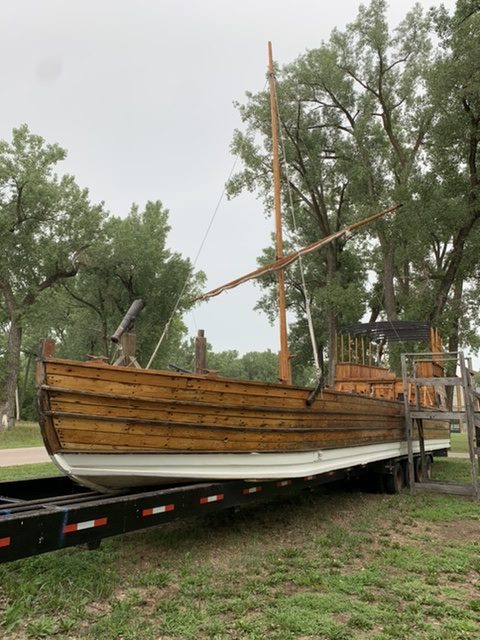
I stalled my departure the next morning just enough to get to the visitor center when it opened. It, like the Nebraska City Interpretive Center advertised a to scale replica of the keelboat. It turned out it had two! There was one on a trailer in the parking lot. I was a little disappointed that it was corded off and I couldn’t explore the deck. That said, I got a whole lot of pictures.

As I locked my bike up outside I was stopped by a couple who were curious about my trip, and we chatted for a while. This was the second time in a week I got to nerd out about Lewis and Clark to a history teacher. The man at the desk of the visitor center had a little dachshund named Speedy who was anything but, and he tried to walk right out the door when I came in. I asked if there was admission (there was not), and the man told me I had to ask a question when I finished looking at the exhibit.
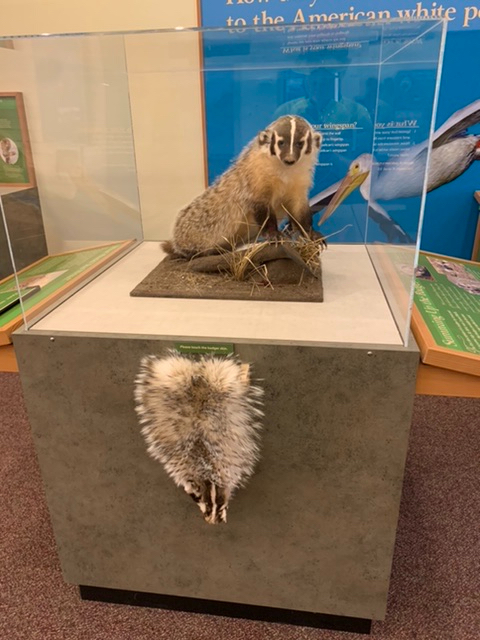
Inside there were a number of displays on the type of wildlife Lewis discovered, a little cot setup in a bifurcated keelboat (most definitely not to scale) to give an idea of the Captain’s Quarters, and the highlight, a display that taught you how to tie a few vital frontiersman knots (I regret very much that I am somehow incapable of remembering these techniques the minute I’m away from the instructions. I managed them correctly in the moment though). Finally, the highlight, there was a rope that went into a hole in a wall with a mural displaying the keelboat on the Missouri. When you pulled on the rope a little display would light up that said how quickly you were moving the keelboat with the force you were exerting. When I got there three children were “pulling” it and barely broke 1 mph. I pulled it and got it to 7mph on my own, but lord knows I couldn’t keep that up all day.
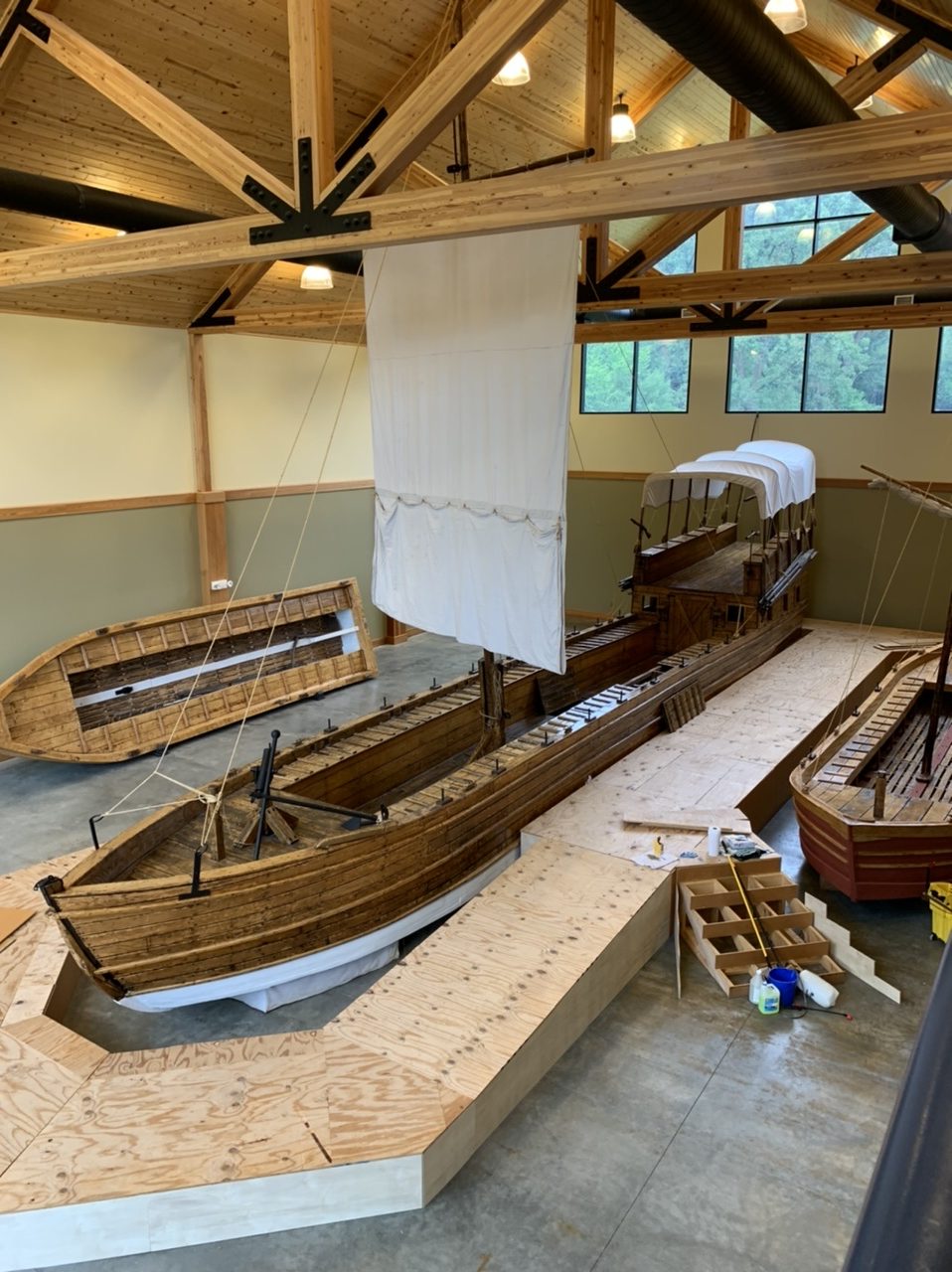
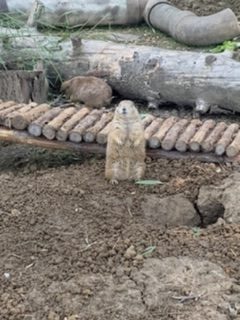
I went into the next enormous room, and I was standing above another keelboat, a pirogue and a model of the iron frame boat Lewis commissioned in Harpers Ferry, but this time covered in deerskin. The stairs were cordoned off again, but only because a carpenter was working downstairs, building a platform around the base of the boat, presumably to let visitors explore inside the keelboat. It was meant to rain again that afternoon, just as it had been drizzling the day before when I left Council Bluffs, so I decided to hunker down until the worst of it was over. I did hop outside to get my map though, and had to pay the toll. I’m at the point where it was tough to think of a question, just because I knew most of the information the museum sought to teach. Lewis and Clark has been my life for a while now. So, I asked about when I would finally see prairie dogs. I knew they were coming soon, but I was impatient for them. I knew they would be the boost in my morale that I’d been looking for. I wound up staying until about noon before heading out, watching the Ken Burns Documentary on the Expedition (I own it on Amazon Prime, but it was something to do). I got chills when they talked about how difficult the trip through the Rockies was. It was coming. I was going to have to brave it soon.

I trekked on to the southern edge of Sioux City and had a surprising amount of difficulty finding a hotel. That wound up being a theme. It rained again that night, and I was slow to get out of the city. There were a few tourist stops I was excited to see before I left, they opened later in the morning. First though, I went to Floyd’s Bluff. Charles Floyd was the only man on the entire expedition to die, and he died in what is now Sioux Falls, or rather, across the river from Sioux Falls. He was buried on a high bluff on the east side of the river, and Lewis and Clark named the bluff and nearby tributary after him. Those Loess Hills I’ve talked about are made up of an especially fine and fertile soil. They’re basically silt. If you’ve ever walked in a pond, a lake, or a riverbed and sunk into slime, that is what the hills are composed of, just not saturated with water. When they get saturated the land sloughs off and erodes into the river. That evidently happened to Floyd’s grave, so it was moved and eventually a stone obelisk was erected at the top of the bluff. I had thought about recording a video update for my blog at the monument, but when I got there the place had the peaceful serenity of a cemetery. I chose to wait.
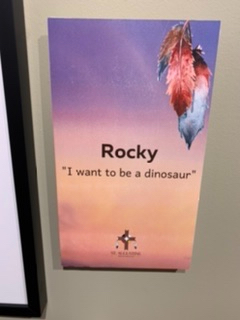
Next I stopped at the Lewis and Clark Interpretive Center. There were two buildings, one more about Iowa and the Missouri River. There was a display of photography by a South Dakotan Photographer, all images of the Missouri, many in winter conditions. There were photos of a group of Lakota children in there regalia with little plaques with quotes about what each child wanted to be when they grow up. It was adorable. Most want to be teachers. A few want to be Youtubers (good luck)! One little girl wants to be an archer. I firmly believe that child is a badass. But one little boy wants to be a dinosaur.

The displays lead me down a hall with a history of the Missouri River, interesting facts about boat travel, information about flooding. I learned about the phrase “eat up the lights” and was fascinated. When Steamboats went up the Missouri, sometimes they couldn’t get to a port before dark, so the pilot would send out his most trusted men in a rowboat and they would float candles with paper around them to shield them from the wind. They’d weigh them down with string and rocks to keep them in place. The candles showed safe paths through the minefield of the Missouri (sandbars and imbedded logs were a constant terror) and the steamboat would head straight for the lights. As it neared it pushed the candles under and the lights would be extinguished.

At the end of the hall I entered the Lewis and Clark section of the interpretive center. It was a completely different experience from any center I’d been to so far. It started with an animatronic Newfoundland, Seaman. If you pushed a button he moved and barked at a little prairie dog in a cage. There were stations after that where you picked up a little booklet. You got to choose who you were, either a named man on the expedition or a position like hunter or translator. Obviously I chose Meriwether Lewis. You put the first page of the booklet in and stamped it. As you went through the exhibits they each had a stamp station and you filled up your booklet by visiting each part of the exhibit in order.

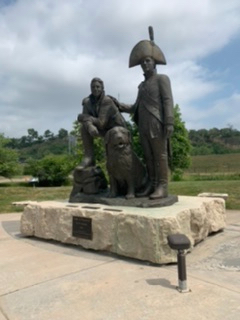
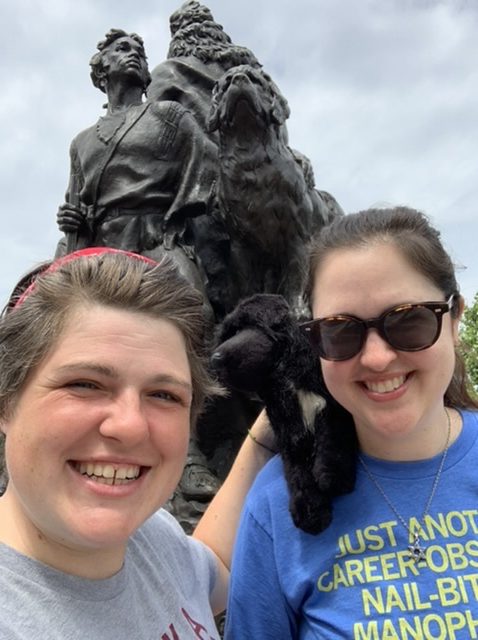
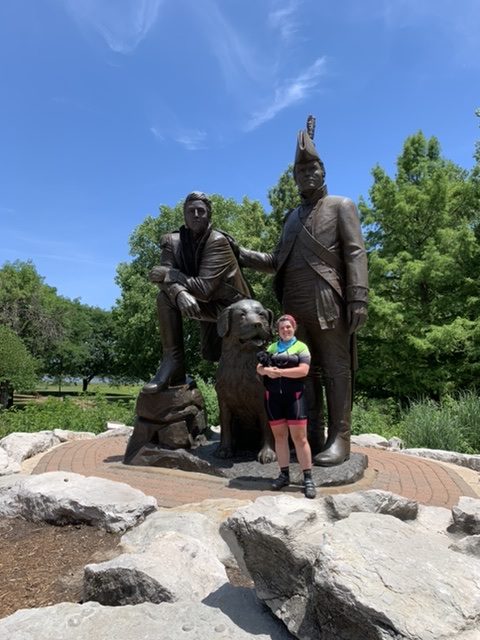
An animatronic Thomas Jefferson talked about the Louisiana Purchase and about Meriwether Lewis, another robotic Charles Floyd talked about himself and his death. Lewis and Clark had a conversation over Floyd’s grave. There was a section about a court martial that happened in the area, a section on Native American children’s games, and a 15-minute film of William Clark talking about his experiences on the expedition. Outside there was a garden with walking paths and statues of a number of different animals encountered on the trail. I got a good laugh because they had a Lewis and Clark (and Seaman) sculpture outside. It was the exact same sculpture I’d seen in Saint Charles, MO at the beginning of the Katy Trail, only smaller.


















 The Stars On the Horizon